

Nutriyummy
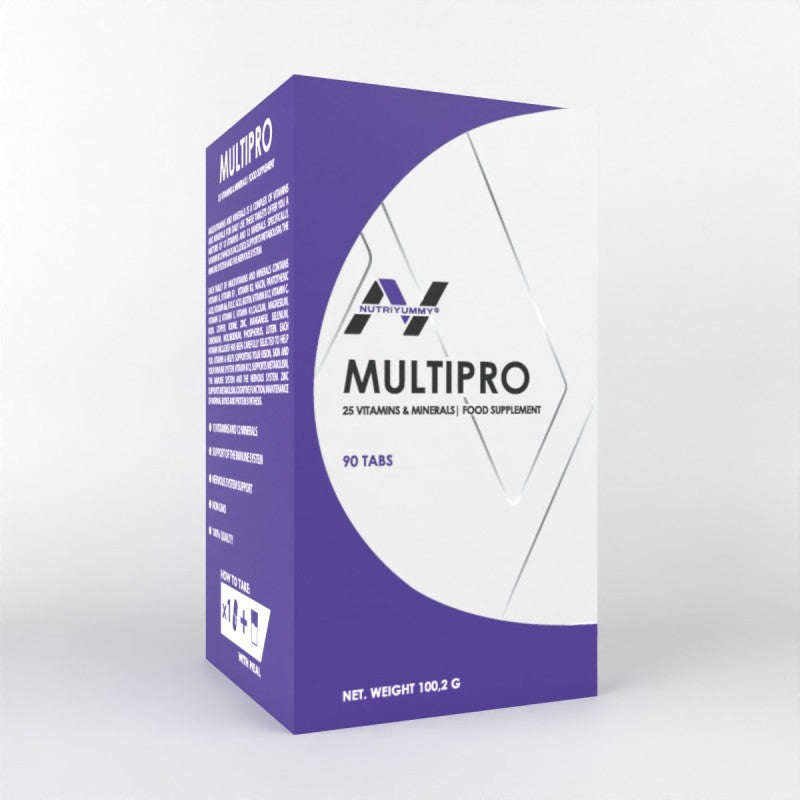
Multipro 90 tabs
Couldn't load pickup availability


- +20


How long will it last?
Two weeks before you run out. The reminder is only stored in your own calendar.

Prove it first, then sell it
Every supplement passes 5 checks before it reaches your home. 847 products didn't make it — what's left has earned your trust.
13 vitamins and 11 minerals in one tablet a day, each with a fixed amount and %RI. 90 tablets: lasts 90 days.
Multipro by Nutriyummy is a tablet with 13 vitamins and 11 minerals in one tablet, with vitamin D as cholecalciferol and iron as ferrous fumarate, plus lutein. You take 1 tablet a day with a meal. Every vitamin and mineral in the tablet provides at least 15% of the reference intake.
Vitamin C contributes to the normal function of the immune system. Vitamin B12 contributes to the reduction of tiredness and fatigue. Vitamin D contributes to the maintenance of normal bones.
- 13 vitamins: A, B1, B2, B3, B5, B6, folic acid, biotin, B12, C, D, E and K1
- 11 minerals: calcium, magnesium, iron, copper, iodine, zinc, manganese, selenium, chromium, molybdenum and phosphorus
- Form: 13 vitamins and 11 minerals in one tablet, with vitamin D as cholecalciferol and iron as ferrous fumarate
- 1 tablet a day: 90 tablets = 90 days
- Suitable for adults and teenagers from 15 years (manufacturer)
- Certificate of analysis per batch via coa@suppstore.com
Collapsible content
Product info
Multipro is a multivitamin for one tablet a day: 13 vitamins and 11 minerals in one tablet, with vitamin D as cholecalciferol and iron as ferrous fumarate, plus lutein. Every substance is on the label with a fixed amount and %RI, so you know exactly what you are getting. You take the tablet with a meal; a tub of 90 tablets lasts 90 days.
Vitamin C contributes to the normal function of the immune system. Vitamin D contributes to the normal function of the immune system. Zinc contributes to the normal function of the immune system. Vitamin B12 contributes to the reduction of tiredness and fatigue. Magnesium contributes to a reduction of tiredness and fatigue. Iron contributes to normal energy-yielding metabolism. The full list is under How it works; the ingredient list is under Composition.
For those who would rather take one tablet a day than a row of separate tubs: adults and teenagers from 15 years who want a broad base of 24 vitamins and minerals.
Thirteen vitamins, eleven minerals, one tablet, ninety days.
Why this product?
- 13 vitamins and 11 minerals per tablet, plus lutein
- Form: 13 vitamins and 11 minerals in one tablet, with vitamin D as cholecalciferol and iron as ferrous fumarate
- Every vitamin and mineral ≥ 15% RI per tablet
- Vitamin C contributes to the normal function of the immune system
- Vitamin B12 contributes to the reduction of tiredness and fatigue
- 1 tablet a day with a meal: 90 tablets = 90 days
- Suitable from 15 years (manufacturer)
- Certificate of analysis available per batch
Ingredients & dosage
Per daily dose (1 tablet):
- Vitamin A: 800 µg RE (100% RI)
- Thiamin (B1): 1.4 mg (127% RI)
- Riboflavin (B2): 1.75 mg (125% RI)
- Niacin (B3): 20 mg NE (125% RI)
- Pantothenic acid (B5): 7.5 mg (125% RI)
- Vitamin B6: 2 mg (142% RI)
- Folic acid: 200 µg (100% RI)
- Biotin: 62.5 µg (125% RI)
- Vitamin B12: 2.5 µg (100% RI)
- Vitamin C: 100 mg (125% RI)
- Vitamin D: 5 µg (100% RI)
- Vitamin E: 15 mg α-TE (125% RI)
- Vitamin K1: 30 µg (40% RI)
- Calcium: 162 mg (20.2% RI)
- Magnesium: 100 mg (26.6% RI)
- Iron: 5 mg (35.7% RI)
- Copper: 500 µg (50% RI)
- Iodine: 100 µg (66.6% RI)
- Zinc: 5 mg (50% RI)
- Manganese: 2 mg (100% RI)
- Selenium: 30 µg (54.5% RI)
- Chromium: 40 µg (100% RI)
- Molybdenum: 50 µg (100% RI)
- Phosphorus: 125 mg (17.8% RI)
The tablet also contains lutein.
One tablet a day, with a meal.
How it works
Vitamin A
- Vitamin A contributes to normal iron metabolism
- Vitamin A contributes to the maintenance of normal mucous membranes
- Vitamin A contributes to the maintenance of normal skin
- Vitamin A contributes to the maintenance of normal vision
- Vitamin A contributes to the normal function of the immune system
- Vitamin A has a role in the process of cell specialisation
Thiamin (B1)
- Thiamine contributes to normal energy-yielding metabolism
- Thiamine contributes to normal functioning of the nervous system
- Thiamine contributes to normal psychological function
- Thiamine contributes to the normal function of the heart
Riboflavin (B2)
- Riboflavin contributes to normal energy-yielding metabolism
- Riboflavin contributes to normal functioning of the nervous system
- Riboflavin contributes to the maintenance of normal mucous membranes
- Riboflavin contributes to the maintenance of normal red blood cells
- Riboflavin contributes to the maintenance of normal skin
- Riboflavin contributes to the maintenance of normal vision
- Riboflavin contributes to the normal metabolism of iron
- Riboflavin contributes to the protection of cells from oxidative stress
- Riboflavin contributes to the reduction of tiredness and fatigue
Niacin (B3)
- Niacin contributes to normal energy-yielding metabolism
- Niacin contributes to normal functioning of the nervous system
- Niacin contributes to normal psychological function
- Niacin contributes to the maintenance of normal mucous membranes
- Niacin contributes to the maintenance of normal skin
- Niacin contributes to the reduction of tiredness and fatigue
Pantothenic acid (B5)
- Pantothenic acid contributes to normal energy-yielding metabolism
- Pantothenic acid contributes to normal synthesis and metabolism of steroid hormones, vitamin D and some neurotransmitters
- Pantothenic acid contributes to the reduction of tiredness and fatigue
- Pantothenic acid contributes to normal mental performance
Vitamin B6
- Vitamin B6 contributes to normal cysteine synthesis
- Vitamin B6 contributes to normal energy-yielding metabolism
- Vitamin B6 contributes to normal functioning of the nervous system
- Vitamin B6 contributes to normal homocysteine metabolism
- Vitamin B6 contributes to normal protein and glycogen metabolism
- Vitamin B6 contributes to normal psychological function
- Vitamin B6 contributes to normal red blood cell formation
- Vitamin B6 contributes to the normal function of the immune system
- Vitamin B6 contributes to the reduction of tiredness and fatigue
- Vitamin B6 contributes to the regulation of hormonal activity
Folic acid
- Folate contributes to maternal tissue growth during pregnancy
- Folate contributes to normal amino acid synthesis
- Folate contributes to normal blood formation
- Folate contributes to normal homocysteine metabolism
- Folate contributes to normal psychological function
- Folate contributes to the normal function of the immune system
- Folate contributes to the reduction of tiredness and fatigue
- Folate has a role in the process of cell division
Biotin
- Biotin contributes to normal energy-yielding metabolism
- Biotin contributes to normal functioning of the nervous system
- Biotin contributes to normal macronutrient metabolism
- Biotin contributes to normal psychological function
- Biotin contributes to the maintenance of normal hair
- Biotin contributes to the maintenance of normal mucous membranes
- Biotin contributes to the maintenance of normal skin
Vitamin B12
- Vitamin B12 contributes to normal energy-yielding metabolism
- Vitamin B12 contributes to normal functioning of the nervous system
- Vitamin B12 contributes to normal homocysteine metabolism
- Vitamin B12 contributes to normal psychological function
- Vitamin B12 contributes to normal red blood cell formation
- Vitamin B12 contributes to the normal function of the immune system
- Vitamin B12 contributes to the reduction of tiredness and fatigue
- Vitamin B12 has a role in the process of cell division
Vitamin C
- Vitamin C contributes to normal collagen formation for the normal function of blood vessels
- Vitamin C contributes to normal collagen formation for the normal function of bones
- Vitamin C contributes to normal collagen formation for the normal function of cartilage
- Vitamin C contributes to normal collagen formation for the normal function of gums
- Vitamin C contributes to normal collagen formation for the normal function of skin
- Vitamin C contributes to normal collagen formation for the normal function of teeth
- Vitamin C contributes to normal energy-yielding metabolism
- Vitamin C contributes to normal functioning of the nervous system
- Vitamin C contributes to normal psychological function
- Vitamin C contributes to the normal function of the immune system
- Vitamin C contributes to the protection of cells from oxidative stress
- Vitamin C contributes to the reduction of tiredness and fatigue
- Vitamin C contributes to the regeneration of the reduced form of vitamin E
- Vitamin C increases iron absorption
Vitamin D
- Vitamin D contributes to normal absorption/utilisation of calcium and phosphorus
- Vitamin D contributes to normal blood calcium levels
- Vitamin D contributes to the maintenance of normal bones
- Vitamin D contributes to the maintenance of normal muscle function
- Vitamin D contributes to the maintenance of normal teeth
- Vitamin D contributes to the normal function of the immune system
- Vitamin D has a role in the process of cell division
Vitamin E
- Vitamin E contributes to the protection of cells from oxidative stress
Vitamin K1
- Vitamin K contributes to normal blood clotting
- Vitamin K contributes to the maintenance of normal bones
Calcium
- Calcium contributes to normal blood clotting
- Calcium contributes to normal energy-yielding metabolism
- Calcium contributes to normal muscle function
- Calcium contributes to normal neurotransmission
- Calcium contributes to the normal function of digestive enzymes
- Calcium has a role in the process of cell division and specialisation
- Calcium is needed for the maintenance of normal bones
- Calcium is needed for the maintenance of normal teeth
Magnesium
- Magnesium contributes to a reduction of tiredness and fatigue
- Magnesium contributes to electrolyte balance
- Magnesium contributes to normal energy-yielding metabolism
- Magnesium contributes to normal functioning of the nervous system
- Magnesium contributes to normal muscle function
- Magnesium contributes to normal protein synthesis
- Magnesium contributes to normal psychological function
- Magnesium contributes to the maintenance of normal bones
- Magnesium contributes to the maintenance of normal teeth
- Magnesium has a role in the process of cell division
Iron
- Iron contributes to normal cognitive function
- Iron contributes to normal energy-yielding metabolism
- Iron contributes to normal formation of red blood cells and haemoglobin
- Iron contributes to normal oxygen transport in the body
- Iron contributes to the normal function of the immune system
- Iron contributes to the reduction of tiredness and fatigue
- Iron has a role in the process of cell division
Copper
- Copper contributes to maintenance of normal connective tissues
- Copper contributes to normal energy-yielding metabolism
- Copper contributes to normal functioning of the nervous system
- Copper contributes to normal hair pigmentation
- Copper contributes to normal iron transport in the body
- Copper contributes to normal skin pigmentation
- Copper contributes to the normal function of the immune system
- Copper contributes to the protection of cells from oxidative stress
Iodine
- Iodine contributes to normal cognitive function
- Iodine contributes to normal energy-yielding metabolism
- Iodine contributes to normal functioning of the nervous system
- Iodine contributes to the maintenance of normal skin
- Iodine contributes to the normal production of thyroid hormones and normal thyroid function
Zinc
- Zinc contributes to normal acid-base metabolism
- Zinc contributes to normal carbohydrate metabolism
- Zinc contributes to normal cognitive function
- Zinc contributes to normal DNA synthesis
- Zinc contributes to normal fertility and reproduction
- Zinc contributes to normal macronutrient metabolism
- Zinc contributes to normal metabolism of fatty acids
- Zinc contributes to normal metabolism of vitamin A
- Zinc contributes to normal protein synthesis
- Zinc contributes to the maintenance of normal bones
- Zinc contributes to the maintenance of normal hair
- Zinc contributes to the maintenance of normal nails
- Zinc contributes to the maintenance of normal skin
- Zinc contributes to the maintenance of normal testosterone levels in the blood
- Zinc contributes to the maintenance of normal vision
- Zinc contributes to the normal function of the immune system
- Zinc contributes to the protection of cells from oxidative stress
- Zinc has a role in the process of cell division
Manganese
- Manganese contributes to normal energy-yielding metabolism
- Manganese contributes to the maintenance of normal bones
- Manganese contributes to the normal formation of connective tissue
- Manganese contributes to the protection of cells from oxidative stress
Selenium
- Selenium contributes to normal spermatogenesis
- Selenium contributes to the maintenance of normal hair
- Selenium contributes to the maintenance of normal nails
- Selenium contributes to the normal function of the immune system
- Selenium contributes to the normal thyroid function
- Selenium contributes to the protection of cells from oxidative stress
Chromium
- Chromium contributes to normal macronutrient metabolism
- Chromium contributes to the maintenance of normal blood glucose levels
Molybdenum
- Molybdenum contributes to normal sulphur amino acid metabolism
Phosphorus
- Phosphorus contributes to normal energy-yielding metabolism
- Phosphorus contributes to normal function of cell membranes
- Phosphorus contributes to the maintenance of normal bones
- Phosphorus contributes to the maintenance of normal teeth
Authorised claims apply here to all 24 vitamins and minerals in the tablet: each provides at least 15% of the reference intake per tablet, the legal threshold. The vitamin C claim on intense physical exercise does not apply: it requires a daily intake of 200 mg vitamin C.
Per daily dose (1 tablet): Vitamin A 800 µg RE (100% RI); thiamin (B1) 1.4 mg (127% RI); riboflavin (B2) 1.75 mg (125% RI); niacin (B3) 20 mg NE (125% RI); pantothenic acid (B5) 7.5 mg (125% RI); vitamin B6 2 mg (142% RI); folic acid 200 µg (100% RI); biotin 62.5 µg (125% RI); vitamin B12 2.5 µg (100% RI); vitamin C 100 mg (125% RI); vitamin D 5 µg (100% RI); vitamin E 15 mg α-TE (125% RI); vitamin K1 30 µg (40% RI); calcium 162 mg (20.2% RI); magnesium 100 mg (26.6% RI); iron 5 mg (35.7% RI); copper 500 µg (50% RI); iodine 100 µg (66.6% RI); zinc 5 mg (50% RI); manganese 2 mg (100% RI); selenium 30 µg (54.5% RI); chromium 40 µg (100% RI); molybdenum 50 µg (100% RI); phosphorus 125 mg (17.8% RI).
This product is positioned as a broad base in one tablet a day: 13 vitamins and 11 minerals, each with amount and %RI, 90 tablets for 90 days, with a certificate of analysis per batch.
Important to know: we may not adopt that positioning as a health claim. What we may say is listed above — these are the exact permitted wordings approved by the European Commission, and they apply to the nutrient named. A seller in the EU may not go beyond those wordings, however well known a use may be from experience, studies or reviews.
Why do you read so little about the effect of this product?
That is not down to us, but to European law. For food supplements we may only use health claims that have been officially approved by the EU.
The result? We can often tell you less than we would like to based on research, tradition and experience. That is how strict the rules are.
Do you have questions about this product? Our expert team is ready to help — with the ingredients, the use, or how it fits into your routine. We explain everything clearly and really think along with you, within the room the law gives us. Contact experts@suppstore.com
How to take
- Adults and teenagers from 15 years: 1 tablet a day with a meal
- 90 tablets = 90 days
- Contains iron, iodine, zinc and vitamin A: do not combine with other multivitamins or supplements with the same substances without advice
- Do not exceed the recommended daily dose
- Food supplements should not be used as a substitute for a varied and balanced diet and a healthy lifestyle
- Keep out of reach of young children
- According to the manufacturer: consult your doctor if you are pregnant, breastfeeding, taking medication or have health problems
- Taking medication? Consult your doctor or pharmacist first
- Storage: at room temperature, dry, in the original packaging
Specifications
- Product category: food supplement
- Brand: Nutriyummy
- Form: tablets
- Contents: 90 tablets (100.2 g)
- Directions: 1 tablet a day with a meal
- Per daily dose (1 tablet): Vitamin A 800 µg RE (100% RI); thiamin (B1) 1.4 mg (127% RI); riboflavin (B2) 1.75 mg (125% RI); niacin (B3) 20 mg NE (125% RI); pantothenic acid (B5) 7.5 mg (125% RI); vitamin B6 2 mg (142% RI); folic acid 200 µg (100% RI); biotin 62.5 µg (125% RI); vitamin B12 2.5 µg (100% RI); vitamin C 100 mg (125% RI); vitamin D 5 µg (100% RI); vitamin E 15 mg α-TE (125% RI); vitamin K1 30 µg (40% RI); calcium 162 mg (20.2% RI); magnesium 100 mg (26.6% RI); iron 5 mg (35.7% RI); copper 500 µg (50% RI); iodine 100 µg (66.6% RI); zinc 5 mg (50% RI); manganese 2 mg (100% RI); selenium 30 µg (54.5% RI); chromium 40 µg (100% RI); molybdenum 50 µg (100% RI); phosphorus 125 mg (17.8% RI)
- Lasts: 90 days
- Allergens: none of the legally designated allergens as an ingredient
- Suitable for: adults and teenagers from 15 years
- Storage: at room temperature, dry, in the original packaging
- Best before and batch number: on the packaging
- EAN: 5200141290215
- Certificate of analysis (CoA): available per batch via coa@suppstore.com
- Returns: 100-day money-back guarantee, free returns
Composition
Per tablet (1 serving)
Vitamin A: 800 µg RE · 100% RI*
Thiamin (B1): 1.4 mg · 127% RI*
Riboflavin (B2): 1.75 mg · 125% RI*
Niacin (B3): 20 mg NE · 125% RI*
Pantothenic acid (B5): 7.5 mg · 125% RI*
Vitamin B6: 2 mg · 142% RI*
Folic acid: 200 µg · 100% RI*
Biotin: 62.5 µg · 125% RI*
Vitamin B12: 2.5 µg · 100% RI*
Vitamin C: 100 mg · 125% RI*
Vitamin D: 5 µg · 100% RI*
Vitamin E: 15 mg α-TE · 125% RI*
Vitamin K1: 30 µg · 40% RI*
Calcium: 162 mg · 20.2% RI*
Magnesium: 100 mg · 26.6% RI*
Iron: 5 mg · 35.7% RI*
Copper: 500 µg · 50% RI*
Iodine: 100 µg · 66.6% RI*
Zinc: 5 mg · 50% RI*
Manganese: 2 mg · 100% RI*
Selenium: 30 µg · 54.5% RI*
Chromium: 40 µg · 100% RI*
Molybdenum: 50 µg · 100% RI*
Phosphorus: 125 mg · 17.8% RI*
Lutein
Ingredients
Dicalcium phosphate, microcrystalline cellulose, magnesium oxide, L-ascorbic acid, nicotinamide, ferrous fumarate, DL-alpha-tocopherol, hydroxypropyl methylcellulose, retinyl acetate, dexpanthenol, manganese sulphate, zinc oxide, L-selenomethionine, magnesium salts of fatty acids, silicon dioxide, cholecalciferol, lutein, cyanocobalamin, copper sulphate, pyridoxine hydrochloride, riboflavin, thiamine hydrochloride, glycerol, phylloquinone, chromium picolinate, potassium iodide, sodium molybdate, carnauba wax, folic acid, D-biotin.
Allergens
None of the legally designated allergens as an ingredient.
Net contents 100.2 g · 90 tablets · serving 1 tablet
*RI = reference intake (Regulation (EU) No 1169/2011).
Frequently asked questions (FAQ)
How do I take Nutriyummy Multipro and how long does a tub last?
Adults and teenagers from 15 years: take 1 tablet a day with a meal. A tub contains 90 tablets (100.2 g) and lasts 90 days at 1 tablet a day. Warnings are under 'How to take'.
Why do I take the Multipro tablet with a meal?
The manufacturer advises taking the tablet with or after a meal.
How do I store the Multipro tub and how long does it keep?
Storage: at room temperature, dry, in the original packaging. The best-before date and batch number are on the packaging.
What is in one Multipro tablet?
Per daily dose (1 tablet): Vitamin A 800 µg RE (100% RI); thiamin (B1) 1.4 mg (127% RI); riboflavin (B2) 1.75 mg (125% RI); niacin (B3) 20 mg NE (125% RI); pantothenic acid (B5) 7.5 mg (125% RI); vitamin B6 2 mg (142% RI); folic acid 200 µg (100% RI); biotin 62.5 µg (125% RI); vitamin B12 2.5 µg (100% RI); vitamin C 100 mg (125% RI); vitamin D 5 µg (100% RI); vitamin E 15 mg α-TE (125% RI); vitamin K1 30 µg (40% RI); calcium 162 mg (20.2% RI); magnesium 100 mg (26.6% RI); iron 5 mg (35.7% RI); copper 500 µg (50% RI); iodine 100 µg (66.6% RI); zinc 5 mg (50% RI); manganese 2 mg (100% RI); selenium 30 µg (54.5% RI); chromium 40 µg (100% RI); molybdenum 50 µg (100% RI); phosphorus 125 mg (17.8% RI).
The tablet also contains lutein. The full ingredient list is in the Composition tab.
Which allergens apply to Multipro?
Allergens: none of the legally designated allergens as an ingredient.
In which forms are the vitamins and minerals in Multipro?
Multipro contains 13 vitamins and 11 minerals in one tablet, with vitamin D as cholecalciferol and iron as ferrous fumarate. Other forms in the tablet: vitamin B12 as cyanocobalamin, folic acid, vitamin K1 as phylloquinone, selenium as L-selenomethionine, chromium as chromium picolinate and zinc as zinc oxide.
We make no statements about differences in effect between forms.
Which 11 minerals are in Multipro?
Calcium, magnesium, iron, copper, iodine, zinc, manganese, selenium, chromium, molybdenum and phosphorus. Together with the 13 vitamins, these are the 24 substances with a %RI on the label; lutein comes on top.
Why does Multipro provide only 20.2% RI calcium and 26.6% RI magnesium?
Multipro provides 162 mg calcium (20.2% RI) and 100 mg magnesium (26.6% RI) to top up your diet.
From what age is Multipro suitable?
The manufacturer indicates Multipro for adults and teenagers from 15 years, at the same dose of 1 tablet a day.
Which EU health claims apply to the vitamins and minerals in Multipro?
These are the health claims the EU has approved for the vitamins and minerals in Multipro:
- Vitamin A contributes to normal iron metabolism
- Vitamin A contributes to the maintenance of normal mucous membranes
- Vitamin A contributes to the maintenance of normal skin
- Vitamin A contributes to the maintenance of normal vision
- Vitamin A contributes to the normal function of the immune system
- Vitamin A has a role in the process of cell specialisation
- Thiamine contributes to normal energy-yielding metabolism
- Thiamine contributes to normal functioning of the nervous system
- Thiamine contributes to normal psychological function
- Thiamine contributes to the normal function of the heart
- Riboflavin contributes to normal energy-yielding metabolism
- Riboflavin contributes to normal functioning of the nervous system
- Riboflavin contributes to the maintenance of normal mucous membranes
- Riboflavin contributes to the maintenance of normal red blood cells
- Riboflavin contributes to the maintenance of normal skin
- Riboflavin contributes to the maintenance of normal vision
- Riboflavin contributes to the normal metabolism of iron
- Riboflavin contributes to the protection of cells from oxidative stress
- Riboflavin contributes to the reduction of tiredness and fatigue
- Niacin contributes to normal energy-yielding metabolism
- Niacin contributes to normal functioning of the nervous system
- Niacin contributes to normal psychological function
- Niacin contributes to the maintenance of normal mucous membranes
- Niacin contributes to the maintenance of normal skin
- Niacin contributes to the reduction of tiredness and fatigue
- Pantothenic acid contributes to normal energy-yielding metabolism
- Pantothenic acid contributes to normal synthesis and metabolism of steroid hormones, vitamin D and some neurotransmitters
- Pantothenic acid contributes to the reduction of tiredness and fatigue
- Pantothenic acid contributes to normal mental performance
- Vitamin B6 contributes to normal cysteine synthesis
- Vitamin B6 contributes to normal energy-yielding metabolism
- Vitamin B6 contributes to normal functioning of the nervous system
- Vitamin B6 contributes to normal homocysteine metabolism
- Vitamin B6 contributes to normal protein and glycogen metabolism
- Vitamin B6 contributes to normal psychological function
- Vitamin B6 contributes to normal red blood cell formation
- Vitamin B6 contributes to the normal function of the immune system
- Vitamin B6 contributes to the reduction of tiredness and fatigue
- Vitamin B6 contributes to the regulation of hormonal activity
- Folate contributes to maternal tissue growth during pregnancy
- Folate contributes to normal amino acid synthesis
- Folate contributes to normal blood formation
- Folate contributes to normal homocysteine metabolism
- Folate contributes to normal psychological function
- Folate contributes to the normal function of the immune system
- Folate contributes to the reduction of tiredness and fatigue
- Folate has a role in the process of cell division
- Biotin contributes to normal energy-yielding metabolism
- Biotin contributes to normal functioning of the nervous system
- Biotin contributes to normal macronutrient metabolism
- Biotin contributes to normal psychological function
- Biotin contributes to the maintenance of normal hair
- Biotin contributes to the maintenance of normal mucous membranes
- Biotin contributes to the maintenance of normal skin
- Vitamin B12 contributes to normal energy-yielding metabolism
- Vitamin B12 contributes to normal functioning of the nervous system
- Vitamin B12 contributes to normal homocysteine metabolism
- Vitamin B12 contributes to normal psychological function
- Vitamin B12 contributes to normal red blood cell formation
- Vitamin B12 contributes to the normal function of the immune system
- Vitamin B12 contributes to the reduction of tiredness and fatigue
- Vitamin B12 has a role in the process of cell division
- Vitamin C contributes to normal collagen formation for the normal function of blood vessels
- Vitamin C contributes to normal collagen formation for the normal function of bones
- Vitamin C contributes to normal collagen formation for the normal function of cartilage
- Vitamin C contributes to normal collagen formation for the normal function of gums
- Vitamin C contributes to normal collagen formation for the normal function of skin
- Vitamin C contributes to normal collagen formation for the normal function of teeth
- Vitamin C contributes to normal energy-yielding metabolism
- Vitamin C contributes to normal functioning of the nervous system
- Vitamin C contributes to normal psychological function
- Vitamin C contributes to the normal function of the immune system
- Vitamin C contributes to the protection of cells from oxidative stress
- Vitamin C contributes to the reduction of tiredness and fatigue
- Vitamin C contributes to the regeneration of the reduced form of vitamin E
- Vitamin C increases iron absorption
- Vitamin D contributes to normal absorption/utilisation of calcium and phosphorus
- Vitamin D contributes to normal blood calcium levels
- Vitamin D contributes to the maintenance of normal bones
- Vitamin D contributes to the maintenance of normal muscle function
- Vitamin D contributes to the maintenance of normal teeth
- Vitamin D contributes to the normal function of the immune system
- Vitamin D has a role in the process of cell division
- Vitamin E contributes to the protection of cells from oxidative stress
- Vitamin K contributes to normal blood clotting
- Vitamin K contributes to the maintenance of normal bones
- Calcium contributes to normal blood clotting
- Calcium contributes to normal energy-yielding metabolism
- Calcium contributes to normal muscle function
- Calcium contributes to normal neurotransmission
- Calcium contributes to the normal function of digestive enzymes
- Calcium has a role in the process of cell division and specialisation
- Calcium is needed for the maintenance of normal bones
- Calcium is needed for the maintenance of normal teeth
- Magnesium contributes to a reduction of tiredness and fatigue
- Magnesium contributes to electrolyte balance
- Magnesium contributes to normal energy-yielding metabolism
- Magnesium contributes to normal functioning of the nervous system
- Magnesium contributes to normal muscle function
- Magnesium contributes to normal protein synthesis
- Magnesium contributes to normal psychological function
- Magnesium contributes to the maintenance of normal bones
- Magnesium contributes to the maintenance of normal teeth
- Magnesium has a role in the process of cell division
- Iron contributes to normal cognitive function
- Iron contributes to normal energy-yielding metabolism
- Iron contributes to normal formation of red blood cells and haemoglobin
- Iron contributes to normal oxygen transport in the body
- Iron contributes to the normal function of the immune system
- Iron contributes to the reduction of tiredness and fatigue
- Iron has a role in the process of cell division
- Copper contributes to maintenance of normal connective tissues
- Copper contributes to normal energy-yielding metabolism
- Copper contributes to normal functioning of the nervous system
- Copper contributes to normal hair pigmentation
- Copper contributes to normal iron transport in the body
- Copper contributes to normal skin pigmentation
- Copper contributes to the normal function of the immune system
- Copper contributes to the protection of cells from oxidative stress
- Iodine contributes to normal cognitive function
- Iodine contributes to normal energy-yielding metabolism
- Iodine contributes to normal functioning of the nervous system
- Iodine contributes to the maintenance of normal skin
- Iodine contributes to the normal production of thyroid hormones and normal thyroid function
- Zinc contributes to normal acid-base metabolism
- Zinc contributes to normal carbohydrate metabolism
- Zinc contributes to normal cognitive function
- Zinc contributes to normal DNA synthesis
- Zinc contributes to normal fertility and reproduction
- Zinc contributes to normal macronutrient metabolism
- Zinc contributes to normal metabolism of fatty acids
- Zinc contributes to normal metabolism of vitamin A
- Zinc contributes to normal protein synthesis
- Zinc contributes to the maintenance of normal bones
- Zinc contributes to the maintenance of normal hair
- Zinc contributes to the maintenance of normal nails
- Zinc contributes to the maintenance of normal skin
- Zinc contributes to the maintenance of normal testosterone levels in the blood
- Zinc contributes to the maintenance of normal vision
- Zinc contributes to the normal function of the immune system
- Zinc contributes to the protection of cells from oxidative stress
- Zinc has a role in the process of cell division
- Manganese contributes to normal energy-yielding metabolism
- Manganese contributes to the maintenance of normal bones
- Manganese contributes to the normal formation of connective tissue
- Manganese contributes to the protection of cells from oxidative stress
- Selenium contributes to normal spermatogenesis
- Selenium contributes to the maintenance of normal hair
- Selenium contributes to the maintenance of normal nails
- Selenium contributes to the normal function of the immune system
- Selenium contributes to the normal thyroid function
- Selenium contributes to the protection of cells from oxidative stress
- Chromium contributes to normal macronutrient metabolism
- Chromium contributes to the maintenance of normal blood glucose levels
- Molybdenum contributes to normal sulphur amino acid metabolism
- Phosphorus contributes to normal energy-yielding metabolism
- Phosphorus contributes to normal function of cell membranes
- Phosphorus contributes to the maintenance of normal bones
- Phosphorus contributes to the maintenance of normal teeth
How do I know Multipro contains what the label says?
The certificate of analysis (CoA) is available per batch via coa@suppstore.com. Give the EAN (5200141290215) or the batch number on your pack and we will send the certificate for your batch.
How is my order shipped?
Every order ships with Track & Trace, so you can follow your parcel. You will see the shipping costs and the expected delivery time for your address before you pay.
How can I pay?
You pay safely with 20+ trusted payment methods on a secure payment page.
Can I return my order?
Yes. You have a 100-day money-back guarantee: return products within 100 days and you get your money back. Returns are free. For hygiene reasons, we do not accept opened packaging. Read our refund policy.